
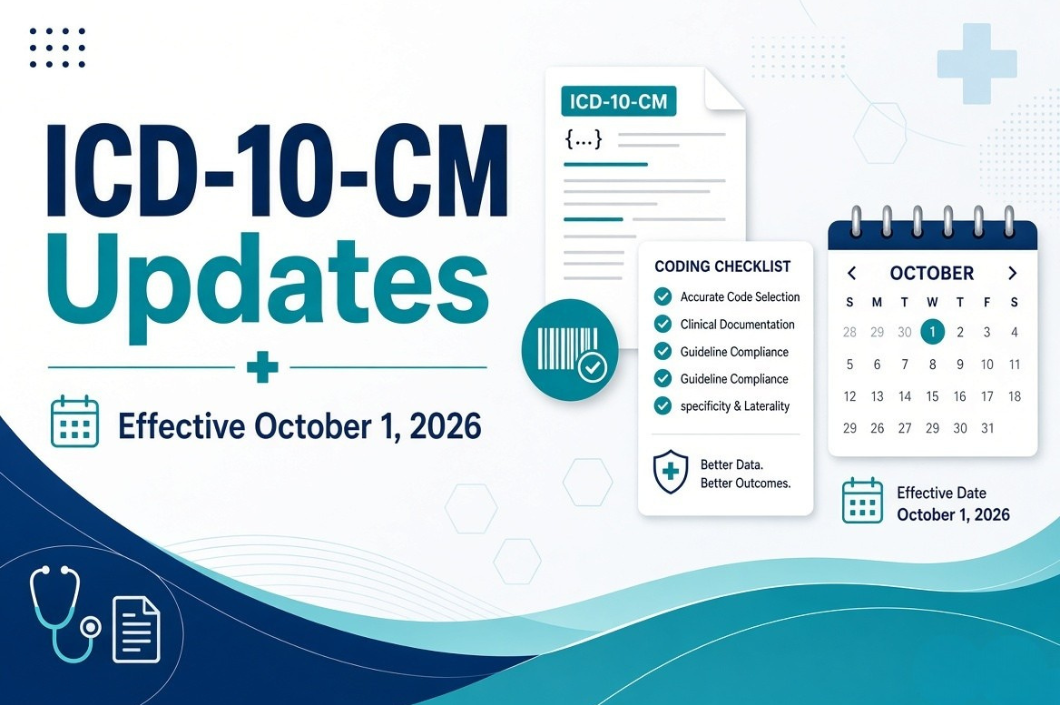
Every year, the ICD-10-CM code set is updated to reflect changes in clinical practice, medical knowledge, and the need for greater diagnostic specificity. The Fiscal Year 2027 ICD-10-CM updates, which take effect on October 1, 2026, introduce important changes that will directly impact medical coding, clinical documentation, claim submission, and revenue cycle performance.
Healthcare practices that prepare early will be better positioned to maintain coding accuracy, reduce claim denials, and support high-quality clinical data. This guide outlines the key updates, why they matter, and the practical steps practices should take before the go-live date.
Overview of the FY 2027 ICD-10-CM Updates
The October 1, 2026 update includes approximately:
- 190 new diagnosis codes
- 30 deleted codes
- 4 revised code descriptions
These codes apply to patient encounters and discharges occurring from October 1, 2026 through September 30, 2027. After that date, the next annual update will take effect.
While the total number of changes is moderate compared to some previous years, the new codes emphasize greater clinical specificity. This means documentation quality will play an even larger role in accurate code assignment.
Key Clinical Areas Affected
1. Cardiovascular Conditions
One of the more notable expansions involves cardiomyopathy coding. Previous broader codes are being refined to allow reporting of familial-genetic dilated cardiomyopathy and other specified forms. A new code (I47.22) has also been added for catecholaminergic polymorphic ventricular tachycardia (CPVT), a condition that requires precise documentation of clinical findings.
2. Obstetrics
Obstetric coding continues to gain specificity. New codes distinguish the location of ectopic pregnancies and whether an intrauterine pregnancy is also present. These changes support more accurate clinical tracking and appropriate reimbursement.
3. Endocrine and Post-Procedural Conditions
New codes address postprocedural hypoglycemia, including hypoglycemia following bariatric surgery. These additions help capture complications more accurately and improve quality reporting.
4. Other Notable Additions
Additional updates include new Z codes (for example, personal history of Clostridioides difficile infection), expanded body mass index (BMI) codes, and refinements in other clinical chapters. These changes support better population health data and risk adjustment.
Why These ICD-10-CM Updates Matter?
More specific diagnosis codes improve several critical areas of healthcare operations:
- Clinical data quality – Better codes create cleaner data for care coordination, quality measures, and population health.
- Risk adjustment accuracy – In value-based care and Medicare Advantage arrangements, precise coding directly affects risk scores and payment.
- Claim acceptance rates – Using outdated or insufficiently specific codes increases the likelihood of denials or requests for additional documentation.
- Compliance readiness – Accurate coding reduces the risk of audits related to upcoding, downcoding, or insufficient documentation.
However, the increased specificity also raises the bar for clinical documentation. If provider notes lack the detail needed to support the new codes, coders may be forced to use less specific alternatives—or claims may face scrutiny.
How Practices Should Prepare for October 1, 2026?
Successful transition to the new code set requires coordinated effort across clinical, coding, and revenue cycle teams. Recommended action steps include:
1. Review the Official Updates
Download and review the FY 2027 ICD-10-CM addenda, code tables, and official coding guidelines from CMS and the CDC. Pay special attention to chapters relevant to your specialties.
2. Update Coding Software and Systems
Confirm that your encoder, practice management system, and electronic health record are scheduled to receive the October 2026 code set update. Test the new codes in a non-production environment when possible.
3. Educate Coding and Clinical Staff
Provide targeted training on the most relevant new and revised codes. Focus on documentation requirements that support the higher level of specificity.
4. Refresh Internal Resources
Update coding tip sheets, specialty reference guides, and documentation templates so providers and coders are working from current information.
5. Monitor Related Coverage Policies
Some National Coverage Determinations (NCDs) are updated in parallel with ICD-10-CM changes. Ensure billing staff are aware of any linked revisions.
6. Track Denial Trends After Go-Live
In the weeks following October 1, closely monitor claim rejection and denial patterns related to diagnosis coding. Early detection allows faster correction.
Common Risks If Practices Do Not Prepare
Organizations that delay preparation often experience:
- Higher rates of claim denials or rejections
- Increased rework and appeals volume
- Temporary drops in clean claim rates
- Documentation gaps that limit the use of new, more specific codes
- Potential compliance exposure during payer or regulatory reviews
Because the annual update is predictable, these risks are largely avoidable with timely planning.
The Role of Accurate Coding in the Larger Revenue Cycle
ICD-10-CM updates are not isolated coding events. They affect the entire revenue cycle—from documentation and charge capture through claim submission, payment posting, and denial management. Practices that treat the annual code update as a strategic priority rather than a last-minute technical task tend to maintain stronger financial performance and cleaner data.
Accurate coding also supports better patient care coordination. When diagnoses are captured with the right level of detail, care teams have a clearer clinical picture, transitions of care improve, and quality reporting becomes more reliable.
Final Thoughts
The ICD-10-CM updates effective October 1, 2026 reinforce the ongoing movement toward greater diagnostic specificity. While the volume of changes is manageable, the emphasis on clinical detail means that documentation quality and coder readiness will determine success.
Healthcare practices that review the updates early, train their teams, update systems, and monitor results after go-live will protect revenue, support compliance, and maintain high-quality clinical data.
Staying current with ICD-10-CM changes is no longer optional—it is a core component of a healthy, resilient revenue cycle.